
Swing into Action: Your Guide to Finding the Best Jazz Drum Classes in Cupertino
Why Learn Jazz Drums in Cupertino?
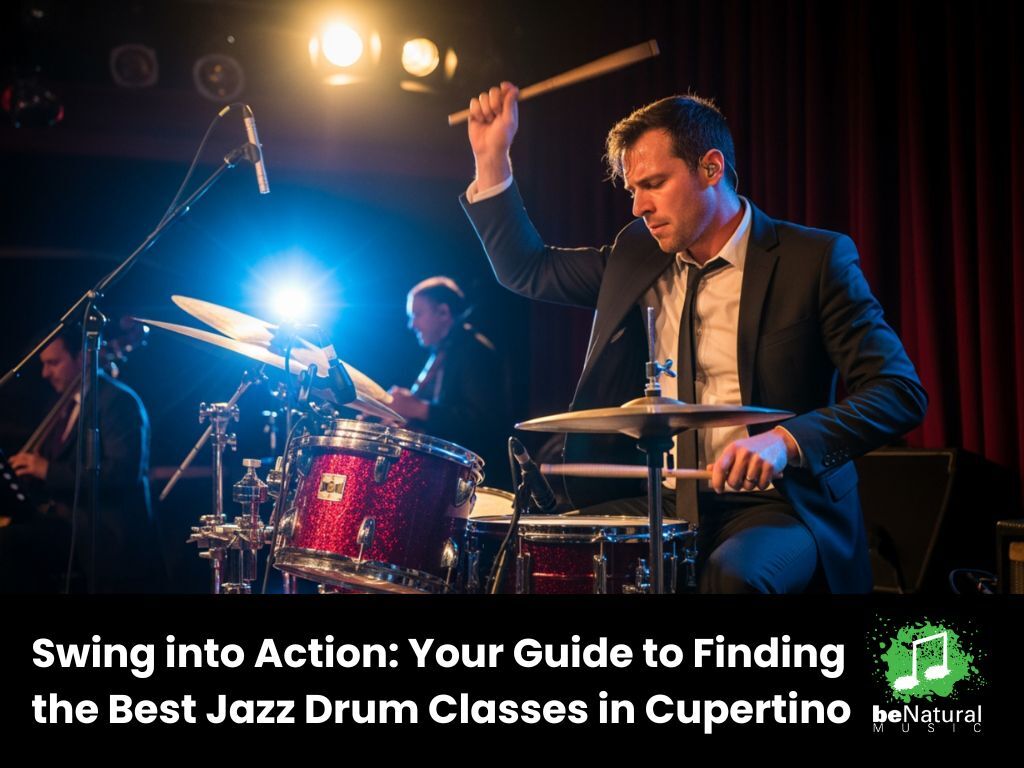
A jazz drum class is the perfect path for students who want to do more than just keep time—they want to join a musical conversation. Unlike rock or pop where the drummer’s main role is to lock in a groove, jazz drumming is about interaction. You’re listening to the bass player, responding to the pianist, and supporting the soloist, all while maintaining a swinging pulse.
This conversational style makes you a better drummer in every genre. The listening skills, four-limb independence, and musical instincts you develop in jazz will lift your rock, funk, and pop playing.
In Cupertino, the jazz scene is alive and well. You can feel its pulse in the student showcases at De Anza College and in community performances that pop up around town. This isn’t just a place to work; it’s a place to play. Finding the right instruction here is key. Your main paths are:
- One-on-One Private Lessons: Work directly with a pro who knows the South Bay music scene. This is the fastest way to get personalized feedback.
- College Programs: De Anza College has a fantastic music program that is a cornerstone of our local jazz culture.
- Performance-Based Schools: This is our specialty at Be Natural Music. We believe the best way to learn is by doing—playing with other local musicians from day one.
I’m Matthew Pinck, and I’ve spent over 27 years teaching music in the Santa Cruz and South Bay area. At Be Natural Music, our jazz drum class programs are built on the idea that the best way to learn is through experience, creativity, and playing with others—the very essence of jazz.

Your Guide to the Ultimate Jazz Drum Class
What You’ll Master: Core Skills and Techniques
Learning jazz drumming is like learning a new language—one based on rhythm, listening, and conversation. A dedicated jazz drum class will build your fluency by focusing on these core skills.

Here are the fundamental elements you’ll master:
- Swing Feel: This is the heartbeat of jazz. It’s a triplet-based rhythmic pulse that creates a flowing, infectious groove. Mastering the swing feel is the first and most important step.
- Ride Cymbal Patterns: In jazz, the ride cymbal is your primary voice. It provides the continuous, swinging pulse that defines the music and supports the band.
- Comping: Short for “accompanying,” comping is the art of playing improvised rhythmic figures on the snare and bass drum to interact with soloists and the band.
- Brush Technique: Brushes are essential for ballads and softer dynamics, allowing for smooth sounds and subtle textures that can’t be achieved with sticks.
- Four-Limb Independence: This is the ability to have your hands and feet play independent parts simultaneously—for example, playing a swing pattern on the ride cymbal while comping with your left hand and feathering the bass drum. It’s the key to creative freedom.
- Listening: Perhaps the most crucial skill of all. In jazz, you’re not just playing your part; you’re listening intently to every other musician and contributing to a collective musical dialogue.
Beyond technique, a jazz drum class teaches you true musicality, like how to improvise and tell a rhythmic story, play melodically on the kit, and understand common song forms like the 12-bar blues. For those just starting, our Drum Lessons provide a fantastic entry point to these fundamental skills.
Jazz vs. The World: How It’s Different & Why It Matters
How does jazz drumming differ from rock or funk? While all drumming requires coordination, the philosophy is fundamentally different.

- The Drummer’s Role: In rock, the drummer is the anchor. In funk, the drummer drives the dance. In jazz, the drummer is a conversationalist, reacting to soloists and interacting dynamically with the bass and piano.
- The Feel: Rock uses a straight eighth-note feel, while jazz is defined by its triplet-based “swing feel,” creating a buoyant, forward momentum.
This unique approach was born in the 1940s when innovators like Kenny Clarke and Max Roach shifted timekeeping from the bass drum to the ride cymbal, freeing up the other limbs for comping and improvisation. This is why learning jazz is so beneficial:
- Improves All Other Styles: The ear training, refined touch, and musicality from jazz transfer directly to rock, funk, and R&B. Your grooves will feel better and your musical instincts will be sharper.
- Open ups Creative Freedom: A jazz drum class teaches you to think beyond patterns and create in the moment, helping you develop your own unique voice on the instrument.
- Deepens Musical Knowledge: To converse in jazz, you need to understand its language. This naturally leads to a deeper understanding of Jazz Theory, harmony, and form.
Common Problems for Cupertino Drummers (and How to Fix Them)
Every great jazz drummer started at the beginning. It’s normal to encounter challenges, and a good jazz drum class is designed to help you overcome them right here in Cupertino.
Here are common hurdles we see with local students and how we help you clear them:
- Problem: Overthinking Comping. Many drummers from the South Bay’s rock scene try to control every note, leading to stiff playing. Solution: We teach you to listen and react, turning your playing into a natural conversation rather than a pre-written script.
- Problem: Panicking During Solos. The idea of “trading fours” at a jam session can be intimidating. Solution: We break down soloing into manageable phrases, giving you the vocabulary and confidence to shine at our student showcases.
- Problem: Getting Lost in the Form. It’s easy to lose your place in a tune when you’re starting out. Solution: We train your ear to hear the structure of the music, so you can confidently navigate a song form whether you’re jamming at De Anza or playing a gig in downtown San Jose.
- Problem: Struggling with Brushes. Brushes require a completely different touch that many self-taught drummers miss. Solution: We provide dedicated, hands-on instruction on the fluid motions needed for an expressive brush technique.
A structured jazz drum class provides a clear path. At Be Natural Music in Cupertino, our Cupertino Staff are passionate about guiding you. Applying these skills in our Youth Rock Jazz Bands program provides the perfect real-world context for your learning.
Finding Your Rhythm: Starting Your Jazz Drum Journey in Cupertino
Choosing Your Path: Private Lessons vs. Online Courses
Ready to dive into a jazz drum class in Cupertino? The next step is deciding on the learning path that’s right for you. At Be Natural Music, we offer options designed for the busy lives of our neighbors.
Private Lessons in Cupertino:
For many, one-on-one instruction is the gold standard. It offers:
- Personalized Feedback: An experienced teacher observes your technique in real-time, providing immediate, custom feedback to accelerate your progress. Our Cupertino instructors are dedicated to crafting lessons just for you.
- Local Teachers: Our Cupertino location is convenient for students from De Anza College, Apple Park, and the surrounding neighborhoods. You’re learning from a passionate, experienced instructor who is part of the local music community.
- Accountability: A regular lesson schedule creates a consistent practice routine, which is essential when you’re juggling a demanding Silicon Valley schedule.
Online Courses:
For those needing more flexibility, online learning is a powerful alternative.
- Flexibility: Learn at your own pace, on your own schedule. This is perfect for busy professionals and students in Cupertino who need to fit practice around work and classes.
- Variety: Our Online Classes at Be Natural Music provide access to a wide range of instructors and teaching styles, covering everything from beginner coordination to advanced brushwork.
Whether you choose private lessons at our Cupertino studio or an online jazz drum class, the most important thing is finding a method that keeps you engaged. We invite you to schedule an introductory lesson to meet our teachers and find the right fit.
How to Begin Your Jazz Drum Class Journey
Starting your jazz drumming adventure is exciting! Here are some actionable steps to begin your jazz drum class journey effectively, right here in Cupertino.

- Master the Ride Cymbal Swing Pattern: This is your first priority. The ride cymbal is the foundation of jazz drumming. Focus on a consistent, flowing swing pattern with a metronome and recordings.
- Listen, Listen, Listen: Immerse yourself in jazz. Pay close attention to the drummers and how they interact with the band. Some essential drummers to start with include Art Blakey, Elvin Jones, Tony Williams, Max Roach, Kenny Clarke, and Brian Blade.
- Practice with Backing Tracks: This simulates playing with a real band and helps you develop your feel for interaction, comping, and navigating song forms.
- Understand Drum Notation: While jazz emphasizes ear training, knowing How to Read Drum Sheet Music is incredibly beneficial for learning patterns and communicating with other musicians.
Working on these fundamentals at home will prepare you to join a real band and contribute to the South Bay’s music scene. Consistency is key—even 30 minutes of focused practice each day will yield incredible results.
Join a Band and Perform in the South Bay
Learning in a jazz drum class is one thing; bringing those skills to life with other musicians is where the real magic happens. At our Cupertino location, we believe performance-based learning is the most effective and enjoyable way to grow.
Our philosophy is all about making music education engaging and performance-focused. Once you’ve built a foundation in your jazz drum class, you can join a Real Jazz Funk Band or our Youth Rock Jazz Bands program. Imagine playing a set at a local Cupertino spot or hitting the stage at one of our Be Natural Music showcases.
Playing in a band pushes you in ways that solo practice cannot. You learn to lock in with a bass player from San Jose, respond to a saxophonist from Sunnyvale, and adapt your dynamics to the group. It’s where the “musical conversation” truly comes alive, and it’s a fantastic way to build confidence and connect with other local musicians. Our dedicated Cupertino Staff are here to make those connections happen.
Ready to move beyond the practice pad and join the vibrant South Bay music community? Our Cupertino studio is the perfect place to start. Contact us today to schedule your first lesson or band audition!
