
From Zero to Maestro: Your Guide to the Best Beginner Digital Pianos
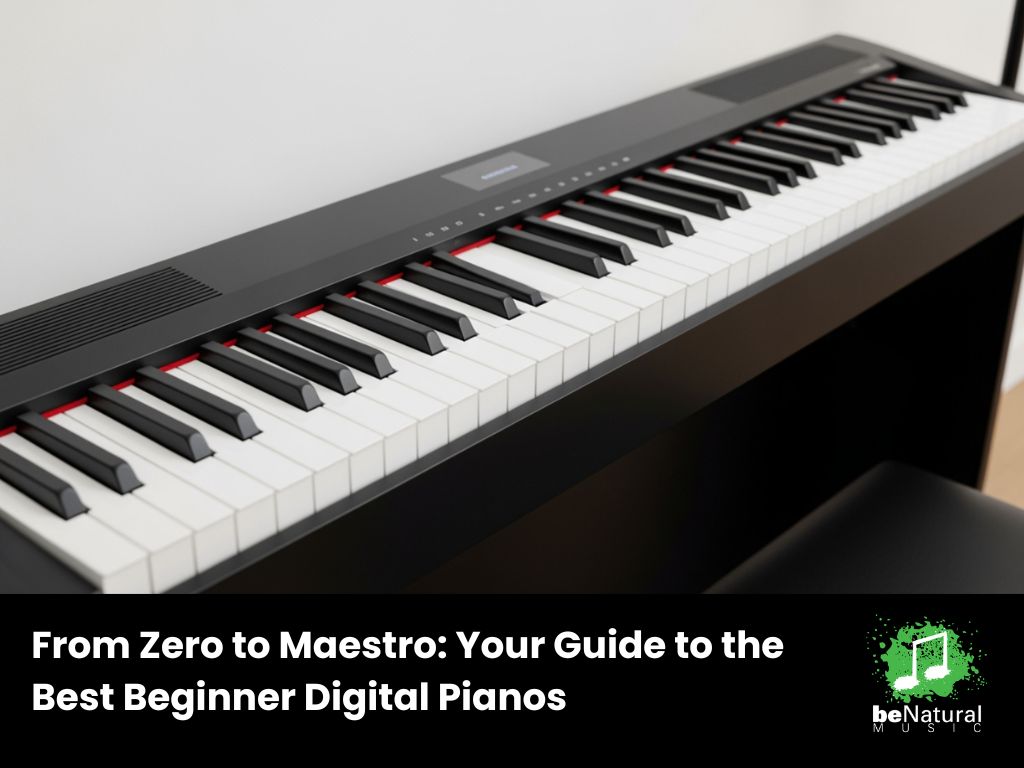
Why Do So Many Beginners Start On the Wrong Instrument, and How Can You Avoid That Mistake?
If you want to build strong habits from day one, you need an entry-level digital piano that feels and responds like a real piano. At Be Natural Music, we recommend starting with the essentials that matter most:
Key Features to Prioritize:
- Weighted keys (hammer action) to build proper finger strength.
- 88 full-size keys for a complete playing range.
- 64+ note polyphony for rich, layered sound (128 is better).
- Headphone jack for quiet practice.
- MIDI/USB connectivity for learning apps.
Digital pianos save you money by eliminating tuning costs, and their compact size and volume control make them perfect for any home.
As the founder of Be Natural Music, I’ve seen how the right instrument can make all the difference. This guide cuts through the marketing fluff to focus on the features that truly foster musical growth.

What to Look for in an Entry Level Digital Piano
Choosing the right entry level digital piano is your first crucial step. It offers an affordable, functional, and realistic playing experience without the high cost and maintenance of an acoustic instrument. Let’s focus on the essential features.
Core Essentials: Keys and Sound
The feel of the keys and the quality of the sound are paramount for developing proper technique and musicality.
Key Action: The Feel of a Real Piano The most critical feature is weighted keys (hammer action). This mechanism mimics the resistance of an acoustic piano’s keys, which is essential for building finger strength and control. Learning on unweighted keys fails to develop the muscle memory needed for expressive playing and makes transitioning to an acoustic piano difficult. For serious learning, fully-weighted hammer action keys are non-negotiable.
Touch Sensitivity: Express Yourself! This feature ensures the volume changes based on how hard you press a key, just like an acoustic piano. It is vital for playing with emotion and is a standard feature on any good digital piano.
How Many Keys? 88 is the Magic Number! We strongly recommend an entry level digital piano with 88 full-size keys. This covers the entire range of a standard piano, ensuring you can play any piece of music without limitations and won’t need to upgrade as you progress.
Polyphony: Don’t Let Notes Disappear! Polyphony is the number of notes a piano can produce at once. Low polyphony can cause notes to cut off unnaturally, especially when using the sustain pedal.
- Minimum: 64 notes.
- Recommended: 128 notes or more for more complex music.
Sounds and Speakers Focus on the quality of the main grand piano sound, not the quantity of extra sounds. Most entry-level models have adequate built-in speakers for home practice. One of the biggest advantages of digital pianos is that they never need tuning. An acoustic piano, according to the Piano Technicians Guild, requires multiple tunings in its first few years and at least one annually thereafter, saving you hundreds of dollars each year. For a deeper dive, explore our guide on Why Choose a Digital Piano Over Acoustic.
Key Features and Connectivity
Modern digital pianos offer features that improve the learning experience.
MIDI and Bluetooth Connectivity MIDI allows your piano to connect to computers and smart devices. A USB to Host port is standard for connecting to educational apps and recording software like GarageBand. Bluetooth MIDI offers the same connection wirelessly, reducing cable clutter.
Helpful Built-in Tools
- Metronome: Essential for developing a strong sense of rhythm.
- Duo Mode (Twin Piano): Splits the keyboard into two identical halves, perfect for student-teacher lessons.
Portability and Power Most beginners start with portable (slab) digital pianos. They are compact, lightweight, and affordable. Some, like the Casio CDP-S160, even offer battery power for ultimate flexibility. Console-style pianos offer a more traditional furniture look but are less portable and more expensive.
Finally, for those looking to understand the nuances of piano playing, including the role of pedals, we have a helpful resource on What Do Piano Pedals Do?.
Recommended Accessories for Your First Piano
To get the most out of your entry level digital piano, you’ll need a few key accessories.
- Keyboard Stand: An adjustable stand (X-style or furniture-style) is crucial for proper posture as the player grows.
- Adjustable Piano Bench: Proper height is essential for correct arm and wrist position. Don’t skimp on an adjustable bench.
- Sustain Pedal: Many pianos come with a basic footswitch. Upgrading to a more robust, piano-style pedal will significantly improve your expressive playing.
- Headphones: A good pair of headphones allows for private practice anytime without disturbing others.
For more comprehensive advice on getting started, refer to our guide on Buying Piano for Beginners.
Our Top Picks for Best Beginner Digital Pianos
Now that we know what to look for, let’s explore some top entry level digital piano models that we recommend to our students at Be Natural Music.
Best for Authentic Feel: Roland FP-10
For students serious about developing proper piano technique, the Roland FP-10 is our top recommendation.

Its standout feature is the PHA-4 Standard hammer action keyboard, which provides an exceptionally realistic and responsive feel, often found in more expensive models. The keys even have an ivory-like texture that improves the playing experience. While light on extra features, its focus is on providing the best possible piano feel for learning.
The FP-10 also includes Bluetooth MIDI, a rare feature in this price range. This allows for a wireless connection to learning apps, including Roland’s own Piano app, which expands the instrument’s functionality. With a solid piano sound and 96-note polyphony, it’s an invaluable tool for building a strong technical foundation.
For personalized recommendations, please Contact Be Natural Music for Recommendations.
The Popular All-Rounder: Yamaha P-143
The Yamaha P-143 (a successor to the popular P-45) is a fantastic all-around entry level digital piano and a student favorite.
It features Yamaha’s Graded Hammer Compact (GHC) keyboard, which provides a weighted feel that is heavier in the low end and lighter in the high end, mimicking an acoustic piano. The sound is sampled from a Yamaha concert grand, offering a bright and clear tone.
With 64-note polyphony, Duo mode for lessons, and a compact, lightweight design, the P-143 is a reliable and portable choice. It also integrates with Yamaha’s Smart Pianist app for easier control and learning. While the P-143 is an excellent choice, other viable alternatives include the ultra-portable, battery-powered Casio CDP-S160 and the Alesis Recital Pro, which also offers fully weighted keys on a budget.
The Yamaha P-143 delivers the realistic sound and touch needed for a great start, making it a popular and trusted choice for beginners.
To explore more about the instruments our students use, visit Learn More About Our Student Pianos.
Start Your Piano Journey Today
Choosing your first entry level digital piano is an exciting step. As we’ve covered, the most important features are a realistic feel from 88 weighted keys and a quality piano sound. These are the bedrock of a successful learning experience, fostering proper technique and ensuring your instrument grows with you.
While extra sounds and features can be fun, they aren’t essential for learning. Prioritize the core playing experience and supplement it with key accessories like an adjustable stand and bench. By focusing on what matters, you avoid common pitfalls and make a smart investment in your musical future.
At Be Natural Music, serving the Bay Area from Cupertino to Santa Clara, we believe the right instrument ignites a lifelong passion for music. An entry level digital piano is the perfect, accessible starting point. The most important thing is to choose an instrument that inspires you to play every day.
Ready to choose the right beginner digital piano and start strong? Be Natural Music can help you match your first instrument with the guidance you need. Explore our Jazz and Rock Piano Lessons and learn more about starting your musical journey with us.
