
Alto vs. Tenor Saxophone: Which Should Beginners Choose First?
- How Do You Choose the Right Saxophone for Beginners: Alto or Tenor?
- What Essential Gear Does a Beginner Saxophone Player Need First?
- Mastering Embouchure, Breathing, and Your First Notes
- Structuring a Daily Practice Routine for Fast Progress
- Are Professional Saxophone Lessons Better Than Self-Teaching for Cupertino and Santa Cruz Beginners?
- Start Your Musical Journey Today!
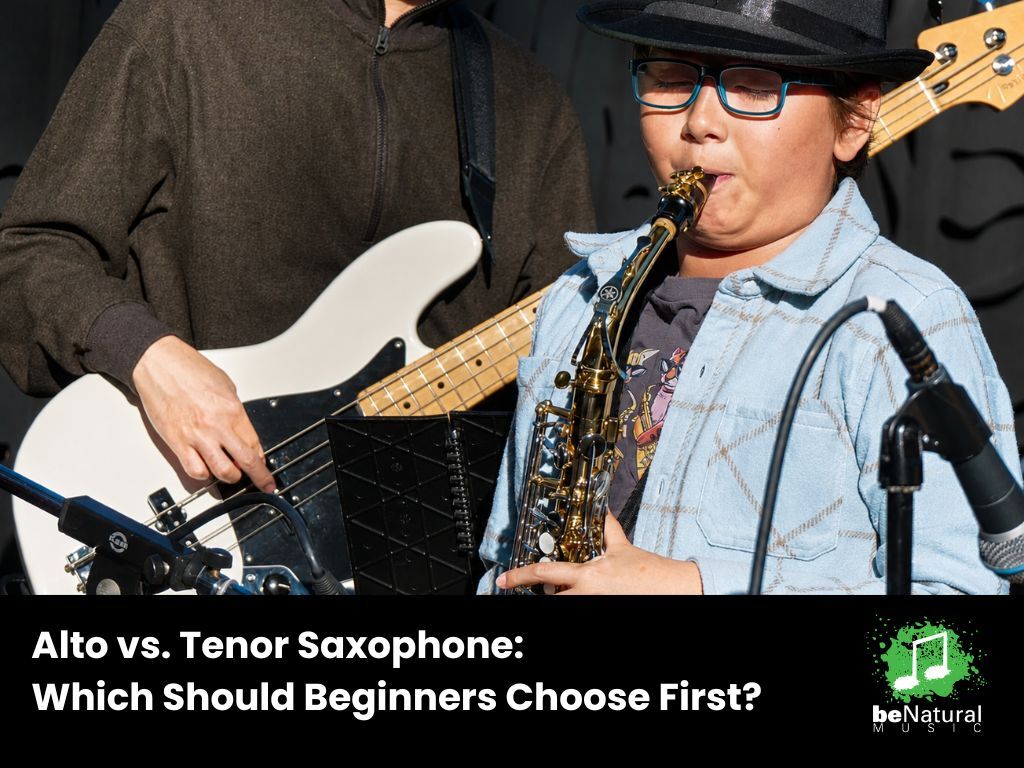
For many parents, it’s not just about buying an instrument; it is about wondering whether their child will stay motivated, feel confident, avoid frustration, and find an activity that truly supports their growth.
If you are a Cupertino or Santa Cruz parent comparing saxophone options for the first time, you need a clear, practical starting point: most younger beginners do best on alto saxophone because it is lighter, smaller, and easier to control, while tenor saxophone is often a better fit for older teens or students drawn to a deeper, jazzier sound.
At Be Natural Music, we help families turn that first question into a confident next step. With more than 25 years of teaching experience, founder Matthew Pinck and our performance-focused instructors guide students through the essentials: choosing the right saxophone, starting with strength 1.5 or 2.0 reeds, building healthy practice habits, and learning in a way that feels creative, encouraging, and human. The goal is not just to help your child play notes; it is to help them develop confidence, focus, self-expression, and a real love for music from the very beginning.

How Do You Choose the Right Saxophone for Beginners: Alto or Tenor?
When entering woodwinds, you will quickly discover that the saxophone family is surprisingly large. Developed by Adolphe Sax in the 1840s as a bridge between woodwinds and brass, the family includes four primary types used today: the Soprano, Alto, Tenor, and Baritone.
For those looking into a saxophone as a beginner, we can immediately rule out the Soprano (which requires an incredibly tight, physically demanding embouchure) and the Baritone (which is far too heavy, expensive, and air-consuming for a novice). That leaves us with the two classic choices: the Alto and the Tenor.
Both of these are transposing instruments, meaning the notes they play sound at a different pitch than what is written on the sheet music. Because they share the exact same key layouts and fingering systems, a student who learns the alto can pick up a tenor later in life without having to relearn how to position their fingers.
However, they differ significantly in weight, physical demands, and tone. School band and youth performance programs in Cupertino and Santa Cruz often have specific needs for both, but choosing the right one for your child comes down to a few physical and musical factors.
| Feature | Alto Saxophone | Tenor Saxophone |
|---|---|---|
| Key | Eb (E-flat) | Bb (B-flat) |
| Weight | Lighter (approx. 4–5 lbs) | Heavier (approx. 6–7 lbs) |
| Air Pressure Required | Moderate (Excellent for kids) | Higher (Requires stronger lungs) |
| Tone | Bright, clear, higher pitch | Deep, warm, rich, smoky |
| Best For | Kids aged 8–12, smaller hands | Teens and adults, jazz lovers |
| Average Starter Cost | Highly budget-friendly | Moderately more expensive |
The Alto Saxophone: The Ideal Saxophone for Beginners
For the vast majority of young students in Cupertino and Santa Cruz, the Alto saxophone is the undisputed champion.
Its smaller frame and lighter weight make it highly manageable for kids as young as eight. Because the keys are spaced closer together, smaller hands can easily reach all the pads without straining. Furthermore, the alto requires less air pressure to produce a steady, pleasing tone. This means your child won’t feel physically exhausted after a short practice session. If you are planning out your child’s musical path, our Guide Music Lessons Cupertino 2026 highlights the alto sax as one of the most accessible starting points for school-aged woodwind players.
The Tenor Saxophone: A Richer Sound for Older Students
If your child is a teenager in Cupertino or Santa Cruz, has slightly larger hands, or is deeply inspired by classic jazz players, the Tenor saxophone is a spectacular alternative.
The tenor is pitched in Bb and produces that iconic, warm, smoky tone associated with jazz giants like John Coltrane and Sonny Rollins. While it is heavier and requires greater lung capacity, older beginners find the slightly looser embouchure (lip position) comfortable. At Be Natural Music, we love working with tenor players in our customized youth jazz and rock ensembles, helping them blend their rich lower tones with guitars, pianos, and drums.
What Essential Gear Does a Beginner Saxophone Player Need First?
Before your child blows their first note, they will need a few essential tools. Avoid the temptation of “saxophone-shaped objects” sold online at suspiciously low prices; a reliable, well-adjusted student instrument is crucial for keeping frustration at bay.
To get started, every beginner needs:
- The Mouthpiece & Ligature: The mouthpiece shapes the sound, while the ligature holds the reed in place.
- Reeds (Strength 1.5 or 2.0): Beginners should start with softer cane reeds. A softer reed vibrates easily, making it simple to produce a sound. We recommend rotating 2 to 4 reeds to prevent uneven wear.
- Neck Strap: Absolutely essential! The neck strap supports the entire weight of the instrument, keeping your child’s hands free to navigate the keys without strain.
- Cork Grease: Applied to the neck cork to allow the mouthpiece to slide on smoothly without tearing the wood.
- Cleaning Swab: A pull-through cloth used after every session to remove moisture and keep the pads dry.
At Be Natural Music, we provide hands-on instrument care guidance right from the very first lesson, ensuring our Cupertino and Santa Cruz students know how to safely assemble their horns without bending any delicate keywork.
Mastering Embouchure, Breathing, and Your First Notes
Producing a beautiful tone on the saxophone relies on three pillars: embouchure, diaphragmatic breathing, and clean articulation.
- The Embouchure: This is how you shape your mouth around the mouthpiece. Have your child say the syllable “Vuh.” This naturally curls the lower lip slightly over the bottom teeth to act as a cushion for the reed. Place the top teeth directly on the top of the mouthpiece, and seal the corners of the lips firmly to prevent air from leaking.
- Diaphragmatic Breathing: Good saxophone tone comes from the core, not the chest. Have your child practice breathing deeply so their stomach expands outward, keeping their shoulders relaxed. This provides a steady, high-velocity stream of air.
- Tonguing: To start a note cleanly, the tip of the tongue should lightly touch the reed and release it with a clean “ta” or “to” sound.
Once your child can blow a steady tone on the mouthpiece alone, it’s time to attach it to the saxophone and play their first three notes: B, A, and G. These notes only require the left hand, making them the perfect starting point.
To help your child connect these physical fingerings to actual music, we highly recommend introducing them to Music Theory for Beginners and teaching them How to Read Sheet Music.
Structuring a Daily Practice Routine for Fast Progress
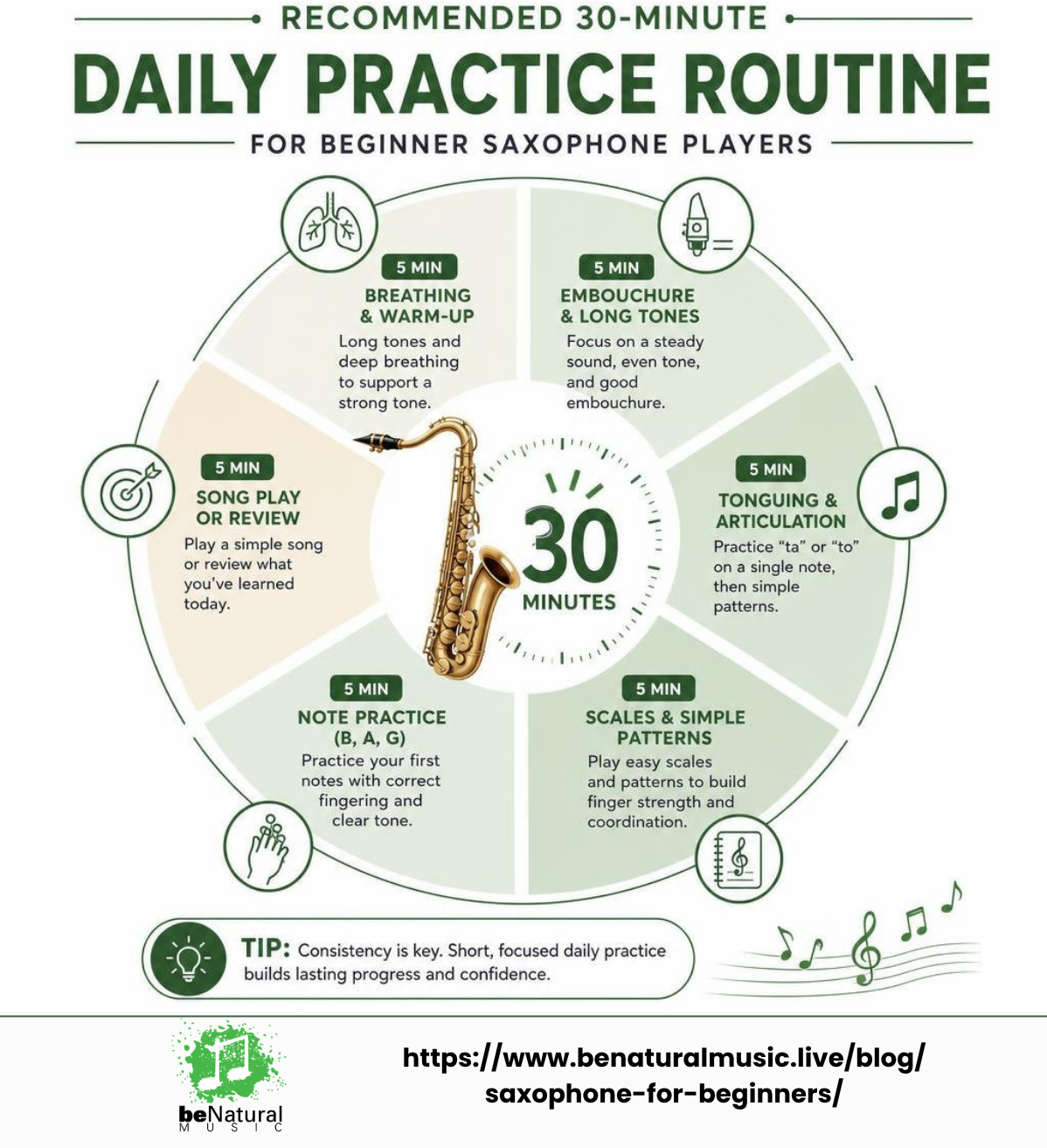
When it comes to mastering the saxophone, consistency is the magic ingredient.
Did you know? Students who practice 20–30 minutes every day improve at roughly three times the rate of students who practice for two hours just once a week.
Short, focused daily sessions build muscle memory in the lips and hands without causing physical fatigue. A highly effective 30-minute home practice routine for a Cupertino or Santa Cruz student looks like this:
- Warm-up (5 mins): Long tones on G, A, and B to focus on steady breath support and a beautiful, unhurried sound.
- Technique & Scales (10 mins): Navigating the fingerings slowly using a metronome.
- Repertoire (10 mins): Working on simple, recognizable songs like “Hot Cross Buns” or “Ode to Joy.”
- Fun Exploration (5 mins): Playing by ear, improvising, or reviewing a favorite tune just for the joy of it!
Are Professional Saxophone Lessons Better Than Self-Teaching for Cupertino and Santa Cruz Beginners?
While YouTube tutorials and free online guides are fantastic supplementary tools, nothing replaces the real-time feedback of a professional instructor.
In Cupertino and Santa Cruz, where families invest in school, enrichment, creative activities, and meaningful after-school experiences, parents often ask: Are music lessons actually worth the money? At Be Natural Music, we believe the answer is a resounding yes, but not just for the sake of learning notes.
- Intellectual Benefits: Learning the saxophone acts as a full-brain workout. It strengthens spatial-temporal skills, listening, memory, and pattern recognition, all skills that support academic confidence.
- Emotional Relief: Kids need healthy outlets for stress, big emotions, and self-expression. Playing the saxophone gives students a constructive way to channel energy into sound, creativity, and accomplishment.
- Social Connection: Unlike isolated screen time or solitary practice, our performance-focused classes bring local kids together. They learn to listen, collaborate, and build lasting friendships in our youth jazz and rock ensembles.
Research shows that students who learn with a qualified instructor progress at least three times faster in their first year compared to self-taught learners.
A private teacher can immediately spot and correct subtle physical issues, such as a biting embouchure, hunched posture, or improper hand placement, before they turn into deeply ingrained bad habits that take months to correct.
For Cupertino and Santa Cruz parents, investing in professional music education goes far beyond just learning an instrument. It fosters cognitive development, builds self-confidence, and teaches discipline. If you are weighing the options for your child, exploring Are Music Lessons Worth It can provide an honest look at the immense long-term intellectual and emotional returns on this investment.
While there are traditional music programs available, Be Natural Music offers a highly unique, performance-focused alternative. We don’t just teach students how to play scales in isolation; we prepare them to step onto a real stage and play with confidence.
Our specialized Saxophone Lessons combine technical fundamentals with the excitement of playing in real jazz and rock bands, giving Cupertino and Santa Cruz kids a vibrant, supportive community where they can truly thrive.
Start Your Musical Journey Today!

Choosing between the alto and tenor saxophone is the exciting first step on a lifelong path of artistic expression. By starting with the lighter, highly accessible alto or the rich, jazz-infused tenor for older kids, and backing their journey with structured daily practice, you’ll have your child playing recognizable melodies in no time.
At Be Natural Music, directed by “yoga Matt,” we believe music should be a joyful, nurturing, and performance-driven experience. With programs serving families in both Cupertino and Santa Cruz, we offer a warm, encouraging environment where young musicians can discover their creative potential, make friends, and rock out on stage.
Inquire today to schedule a consultation or sign up directly for our engaging Saxophone Lessons. Let’s bring your child’s musical vision to life!

